
What Makes L-ascorbic Acid a Skincare Staple?
The Science of L-ascorbic Acid: Core Mechanisms & Research Backing
1. Potent Antioxidant Defense Against Oxidative Stress
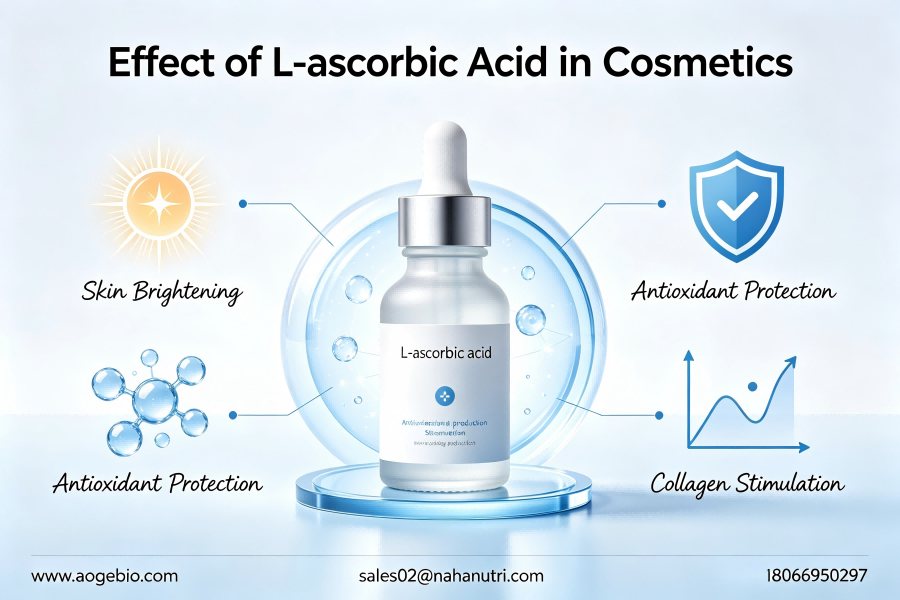
Oxidative stress from UV radiation, pollution, and aging generates free radicals that damage skin cells, DNA, and collagen—accelerating wrinkles, sagging, and discoloration. L-ascorbic acid is a water-soluble antioxidant that neutralizes these free radicals before they cause harm.
Research Evidence: A 2017 clinical review in the Journal of Clinical and Aesthetic Dermatology confirmed that topical L-ascorbic acid reduces UV-induced DNA damage, lipid peroxidation, and pro-inflammatory cytokine release in keratinocytes. Unlike sunscreen, it does not absorb UV light but mitigates post-exposure oxidative damage, complementing sun protection.
2. Collagen Synthesis: The Anti-aging Foundation
Collagen loss is the primary cause of fine lines, wrinkles, and loss of firmness. L-ascorbic acid acts as an essential cofactor for enzymes that stabilize collagen fibers and stimulate new collagen production. It also inhibits matrix metalloproteinases—enzymes that break down existing collagen.
Research Evidence: A 2022 study in Antioxidants demonstrated that topical L-ascorbic acid upregulates collagen gene expression and increases dermal collagen density in human skin biopsies after 12 weeks of daily use. A 2025 consensus paper in Surgical & Cosmetic Dermatology emphasized that pure, stabilized L-ascorbic acid is the most effective form for collagen stimulation, with 10–20% concentrations yielding optimal results.
3. Skin Brightening & Hyperpigmentation Correction
Dullness, sun spots, melasma, and post-inflammatory hyperpigmentation (PIH) arise from excess melanin production. L-ascorbic acid brightens skin through two key pathways:
- Inhibits melanin synthesis: Blocks tyrosinase, the enzyme critical for melanin production.
- Reduces existing pigment: Converts dark oxidized melanin to lighter, colorless forms.
Research Evidence: A systematic review in the International Journal of Dermatology (2023) analyzed 15 clinical trials and confirmed that 5–20% topical L-ascorbic acid significantly reduces hyperpigmentation and improves skin brightness over 8–12 weeks. The review noted consistent efficacy for melasma, sun spots, and acne-related PIH with minimal irritation.
4. Photoprotection & Anti-Inflammatory Benefits
While not a replacement for sunscreen, L-ascorbic acid provides adjunctive photoprotection by reducing UV-induced erythema and inflammation. It also supports skin barrier function by enhancing lipid production and reducing transepidermal water loss.
Research Evidence: A 2025 study in the Journal of Investigative Dermatology found that L-ascorbic acid promotes keratinocyte proliferation and thickens the epidermis via DNA demethylation, strengthening the skin’s natural defense against environmental stressors.
Key Advantages of L-ascorbic Acid in skincare
- Proven Efficacy: Backed by 50+ years of clinical research and 100+ peer-reviewed studies, with consistent results across skin types and ages.
- Multi-Benefit Action: Addresses aging, dullness, hyperpigmentation, and environmental damage in one ingredient—simplifying routines.
- Synergistic Potential: Boosts efficacy of vitamin E, ferulic acid, and niacinamide; a 2017 study found combining 15% L-ascorbic acid with vitamin E and ferulic acid doubles antioxidant activity and stability.
- Versatile Formulations: Works in serums, creams, toners, and masks; suitable for most skin types (normal, dry, combination, oily) when formulated correctly.
- Minimal Long-Term Irritation: 5–10% concentrations are well-tolerated by sensitive skin; irritation is rare with stabilized, pH-adjusted (pH <3.5) formulas.
Cosmetic Applications of L-ascorbic Acid
1. Anti-Aging Serums & Treatments
The most common application—10–20% L-ascorbic acid serums target fine lines, wrinkles, and sagging. Used daily in the morning, they protect against daytime oxidative stress and boost collagen synthesis overnight.
2. Brightening & Pigmentation Correctors
Formulations with 5–15% L-ascorbic acid reduce sun spots, melasma, and PIH. Often combined with niacinamide or tranexamic acid for enhanced brightening; ideal for dull, uneven skin tones.
3. Moisturizers & Day Creams
Lower concentrations (3–5%) are added to daily moisturizers for ongoing antioxidant protection and barrier support. Suitable for sensitive skin or those new to actives.
4. Post-Procedure & Soothing Products
L-ascorbic acid’s anti-inflammatory properties make it ideal for calming skin after laser treatments, peels, or sunburns. It reduces redness and supports wound healing by promoting collagen production.
5. Toners & Masks
Lightweight toners with 2–5% L-ascorbic acid prep skin for serums; masks deliver concentrated brightening and antioxidant benefits 1–2 times weekly.
Frequently Asked Questions (FAQ)
Q1: What concentration of L-ascorbic acid is most effective?
A: Research shows 10–20% is optimal for anti-aging and brightening. Sensitive skin should start with 5% to build tolerance. Concentrations above 20% offer no additional benefits and increase irritation risk.
Q2: Why does L-ascorbic acid sometimes cause irritation?
A: Pure L-ascorbic acid is hydrophilic and unstable; irritation often stems from high pH (>3.5) or poor formulation. Stabilized formulas with pH <3.5, or those blended with vitamin E/ferulic acid, minimize irritation while enhancing efficacy.
Q3: Can L-ascorbic acid be used with other actives like retinol?
A: Yes. They work synergistically. L-ascorbic acid (morning) protects against oxidative stress; retinol (night) boosts collagen and cell turnover. Avoid mixing in the same routine if skin is sensitive, as both can cause mild irritation.
Q4: How long does it take to see results?
A: Brightening and reduced dullness appear in 4–6 weeks; fine line improvement takes 8–12 weeks; collagen-boosting firmness requires 3+ months of consistent daily use.
Q5: Is L-ascorbic acid safe for sensitive skin?
A: Yes—when formulated correctly. Opt for 5–10% concentrations, pH-stabilized formulas, or derivatives like magnesium ascorbyl phosphate (MAP) if pure L-ascorbic acid irritates. A 2025 consensus paper confirmed low irritation rates for stabilized L-ascorbic acid in sensitive skin cohorts.
Conclusion
L-ascorbic acid’s status as a skincare staple is no accident—it is the only antioxidant that combines proven collagen stimulation, potent free radical neutralization, and effective pigment correctionwith decades of clinical validation. For anyone seeking to address aging, dullness, or environmental damage, it remains the gold-standard active ingredient. When chosen at the right concentration (10–20% for most skin), formulated for stability, and used consistently, L-ascorbic acid delivers transformative, long-term results that justify its permanent place in daily skincare routines.
Name: Yuki
E-mail: sales02@nahanutri.com
WhatsApp:+8618066950297