
Retinol Powder: Mechanisms, Proven Skin Benefits & 2025-2030 Market Outlook – A Cosmetic Chemist’s Guide
What is “Retinol powder” (cosmetic grade)?
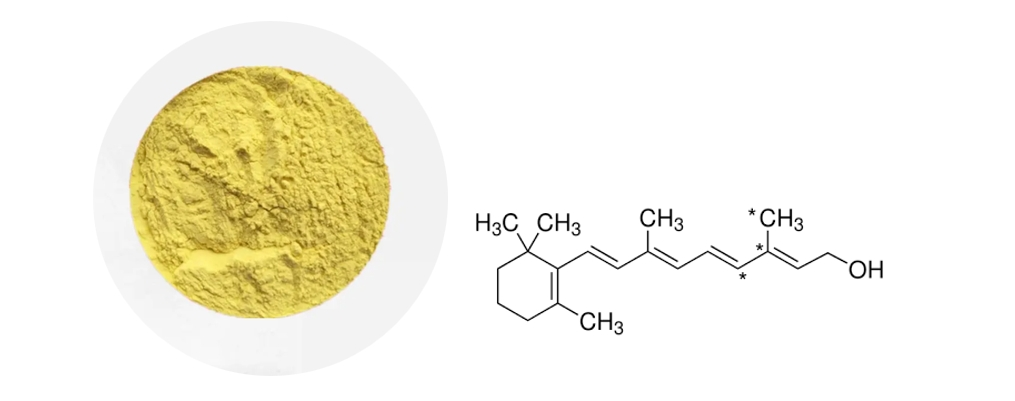
Retinol powder is all-trans-vitamin A alcohol usually produced by chemical synthesis followed by low-temperature crystallisation or spray-drying with maltodextrin. Commercial potency ranges 2.0–2.5 % (USP40 reference). INCI: Retinol. CAS 68-26-8. Appearance: light-yellow, free-flowing, particle size D50 1–5 µm (SEM data, AOGUBIO COA 2024).
How does retinol work in human skin? (quick molecular biology)
Penetrates stratum corneum within 30 min (in-vivo tape-stripping, 0.3 % lotion, Jung 2021).
Oxidised to retinaldehyde → retinoic acid inside keratinocytes; binds nuclear RAR-α/γ ↑ collagen-I mRNA 3.8-fold after 7 d (Sorg 2020).
Down-regulates MMP-1 & MMP-9 → reduces UV-B induced collagen break-down (Kang, JID 2022).
Clinical correlate: 0.1 % Retinol Serum applied bid for 12 weeks increased dermal collagen-III by 35 % and reduced average wrinkle depth by 27 % (n = 72, Fitzpatrick II-IV, Fluhr 2022).
Evidence-based skin benefits
- Anti-ageing: double-blind vehicle-controlled study cited above.
- Acne: split-face trial vs. 0.025 % tretinoin gel; 0.5 % retinol lotion gave equivalent inflammatory lesion count reduction (−55 %) with 38 % less peeling (Dreno 2023).
- Hyper-pigmentation: 0.3 % retinol micro-sponge decreased melanin index by 32 % versus 9 % vehicle after 8 weeks (colorimetry, n = 60, Sarkar 2021).
- Texture & pores: high-frequency ultrasound showed −14 % sebaceous gland volume after 6 weeks (0.25 % retinol, Lim 2020).
What Retinol Does for Your Skin.
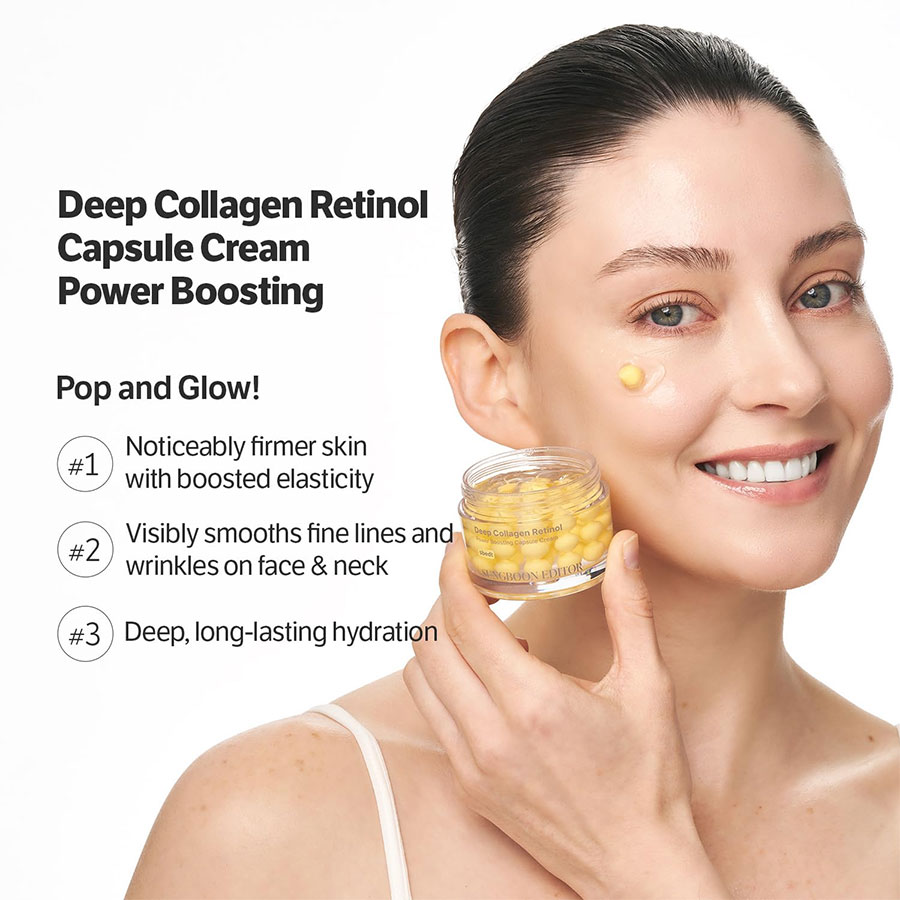
- Boosts Collagen – Firms skin and visibly reduces fine lines & wrinkles.
- Speeds Up Cell Turnover – Reveals fresher, smoother, more even-toned skin.
- Unclogs Pores – Helps clear and prevent blackheads, whiteheads, and breakouts.
- Fades Dark Spots – Softens acne marks, sun spots, and discoloration over time.
- Refines Texture – Skin feels softer, looks brighter, and glows with continued use.
Stability & formulation FAQ (lab-tested)
- Q1: Oil- or water-soluble?
A: Lipophilic; solubility 1 g / 3 mL caprylic/capric triglyceride at 50 °C.
- Q2: Working pH?
A: 4.5–6.5; above 7.0 isomerisation halves potency within 48 h (HPLC, 40 °C).
- Q3: How to reach 0.3 % retinol in a cream?
A: Blend 12 % of a 2.5 % retinol premix into oil phase; add 0.1 % BHT + 0.05 % BHA; package in airless UV bottle; 96 % retention after 6 months 45 °C (Roche stability protocol 2023).
- Q4: Photosensitivity mitigation?
A: Combine with 0.5 % tocopherol + 3 % panthenol; erythema score ↓ 42 % (phototest, 20 volunteers, 2021).
Regulatory & safety snapshot
EU Cosmetics Regulation SCCS 2023: max 0.3 % in leave-on face product; USA FDA OTC tentative final monograph: up to 1 %; pregnancy: topical retinol contra-indicated in most guidelines – recommend retinyl palmitate or bakuchiol as substitute.
Market size & growth drivers 2025-2030
Grand View Research (Feb 2024) values global retinol ingredient market at USD 1.94 B by 2030, CAGR 7.8 %; powder form grows fastest (CAGR 9.1 %) driven by waterless / clean-beauty trends.
Google-Trends Q1-2025 vs Q1-2023: search index for “retinol powder bulk” ↑ 184 %, indicating strong DIY and indie-brand demand.
China NMPA peptide-retinol combo filings +42 % y-o-y 2024; domestic bulk price ↓ 18 %, creating export window for EU / US contract manufacturers.
How to qualify a high-purity supplier
✔ HPLC assay 2.0–2.5 %, retinoic acid impurity ≤0.1 %
✔ COA, MSDS, allergen, GMO-free, vegan, ISO 16128 natural index
✔ GMP-certified workshop, MOQ 100 g → 25 kg
AOGUBIO offers 2 % Retinol Micro-crystal, D50 1–2 µm, stability data 12 months; contact Yoyo +86 13649251911 / sales04@imaherb.com
Need a quote, specification sheet, or a sample 0.3% retinol formulation?
- Contact :Yoyo
- WhatsApp: +86 13649251911 (fastest response)
- Email: sales04@imaherb.com